Introduction
The year 2019 marks the 25th anniversary of the International Conference on Population and Development (ICPD) which was held in Cairo, Egypt where 179 governments adopted a revolutionary Program of Action (PoA) recognizing that sexual and reproductive health and rights (SRHR) to take center stage in national and global development efforts.
Specifically, the Program of Action called for all people to have access to comprehensive reproductive health care, including voluntary family planning, safe pregnancy and childbirth services, and the prevention and treatment of sexually transmitted infections.
It also recognized that reproductive health and women’s empowerment are intertwined, and that both are necessary for the advancement of society.
‘The full and equal participation of women in civil, cultural, economic, political and social life, at the national, regional and international levels, and the eradication of all forms of discrimination on grounds of sex, are priority objectives of the international community,’ the Program of Action affirmed.
Although ‘ICPD’ is often used as an acronym to refer to the global consensus that sexual and reproductive health and rights are human rights that these are a precondition for women’s empowerment, and that women’s equality is a precondition for securing the well-being and prosperity of all people.
Background
In the 1960s, as mortality rates declined around the world, some researchers and policymakers grew panicked that population growth would outstrip natural resources, leading to famine and societal collapse.
Governments responded: some studied the impact of population growth on economies and the environment, others expanded family planning programs, and a few took actions, sometimes coercive ones, to lower fertility rates.
The early 1990s marked a dramatic departure from conventional ideas about how governments should try to influence the size and well-being of the societies they govern, and brought an unparalleled consensus among national governments about population policy. This new perspective shifted the emphasis of population policies away from slowing population growth to improving the lives of individuals, particularly women. The policies spawned by this consensus continue to evolve.
A turning point in international discussions on population was the 1994 International Conference on Population and Development (ICPD), held in Cairo. Whereas earlier world conferences on population had focused on controlling population growth in developing countries, mainly through family planning, the Cairo conference enlarged the scope of policy discussions.
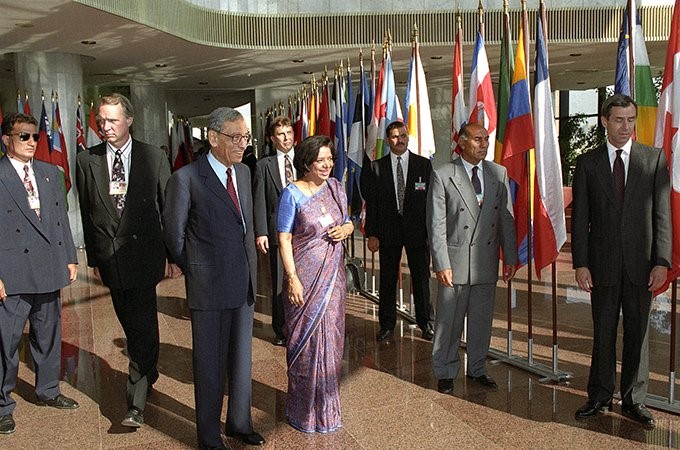
Governments then agreed that population policies should address social development beyond family planning, especially the advancement of women, and that family planning should be provided as part of a broader package of reproductive health care. Underlying this new emphasis was a belief that enhancing individual health and rights would ultimately lower fertility and slow population growth.
The Cairo conference was also far larger and more inclusive than earlier world population conferences. It brought together 11,000 representatives from governments, nongovernmental organizations (NGOs), international agencies, and citizen activists. The diversity of views contributed to the unprecedented international consensus achieved in 1994.
By placing the causes and effects of rapid population growth in the context of human development and social progress, governments and individuals of all political, religious, and cultural backgrounds could support the recommendations. Although there were ideological and religious differences over issues such as definitions of reproductive health, adolescent sexuality, and abortion, all but a few nations fully endorsed the final program.
The ICPD Program of Action brought the global community together and reflected a new consensus about response to population growth. It firmly established that the rights and dignity of individuals, rather than numerical population targets, were the best way for individuals to realize their own fertility goals. Furthermore, governments acknowledged that these rights are essential for global development.
The ICPD represented a resounding endorsement that securing reproductive health, individual rights and women’s empowerment is the obligation of every country and community.
Program of Action
Cairo’s Program of Action (PoA) was ambitious: It contained more than 200 recommendations in the areas of health, development, and social welfare. A central feature of the PoA is the recommendation to provide comprehensive reproductive health care, which includes family planning; safe pregnancy and delivery services; abortion where legal; prevention and treatment of sexually transmitted infections (including HIV/AIDS); information and counseling on sexuality; and elimination of harmful practices against women (such as genital cutting and forced marriage).
The Cairo PoA also defined reproductive health for the first time in an international policy document. The definition states that ‘reproductive health is a state of complete physical, mental, and social well-being and not merely the absence of disease or infirmity, in all matters relating to the reproductive system.’
The PoA also says that reproductive health care should enhance individual rights, including the ‘right to decide freely and responsibly’ the number and spacing of one’s children, and the right to a ‘satisfying and safe sex life.’ This definition goes beyond traditional notions of health care as preventing illness and death, and it promotes a more holistic vision of a healthy individual.
Post Cairo Debate Continued
Sharp ideological differences divided participants at the Cairo conference and continue to be divisive till today. Women’s health advocates lobbied hard for incorporating the concepts of reproductive health and rights in the conference document, and have called on governments to reaffirm these rights in international meetings since Cairo. Though most governments are supportive, the Vatican, some Catholic countries, and the United States under the Bush administration at now under Trump administration have taken issue with how these rights are defined are bit departure from the democrat administration.
A central sticking point is whether abortion can be interpreted as a component of reproductive health and as a universal right. The Cairo conference forged a consensus with carefully crafted language stating that ‘in no case should abortion be promoted as a method of family planning,’ and that ‘in circumstances in which abortion is not against the law, such abortion should be safe.’ This consensus, however, has not held firm over time.
Debates also continue about the importance of controlling population growth and whether the entire Cairo agenda is feasible. Because large numbers of young people are in or approaching their childbearing ages, world population will continue to grow well into the 21st century. In some of the countries survey data show that average family size hardly declined rather stalled in the second half of the 1990s which includes from Bangladesh and Egypt.
These findings were surprising given that the drop from 5 or 6 children to 3.5 children on average occurred fairly rapidly between the 1970s and 1990s. It is possible that the two-child average is still a long way off, or will never be reached, in some societies. And while advancing women’s health and rights may well contribute to the transition to smaller families, the goal may also require long-term efforts in the poorest societies. After all, women in the poorest societies suffer the greatest health problems and have the most limited opportunities.
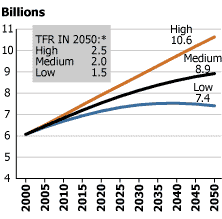
These efforts are of no small consequence for world population: Population projections show that a small difference in average family size worldwide, such as an average of 2.5 children versus 2.0 children, translates into a difference of 1.7 billion people in the world’s population total in 2050 (see Figure 1).
A number of other factors influence current discussions on population. The HIV/AIDS epidemic dwarfs other health and development concerns in some countries in Africa and requires major government comments and infusions of funds to save lives and salvage communities. In Asia and other regions where birth rates have fallen, governments face the problem of aging populations and a critical lack of social and economic support for the elderly.
In spite of continuing debates and other obstacles, a large number of countries have redefined policy and program objectives and adopted approaches that aim to meet individual needs rather than national demographic goals. Language about sexuality and reproductive health that was considered new and groundbreaking in 1994 is now part of the health lexicon in most countries.
The world’s two most populous countries, India and China, also embarked on new initiatives in the second half of the 1990s that reoriented their national family planning programs toward meeting reproductive health needs.
Bangladesh after ICPD
In the recently concluded 52nd Commission for Population and Development (CPD) session at UN Headquarters Bangladesh reported its readiness to use South-South Cooperation (SSC) to share its best practices in population and development to achieve the goals of the International Conference on Population and Development Program of Action (ICPD PoA).
‘We are also keen on learning from the best practices of our partner countries and UN agencies, and taking advantage of the South-South Cooperation model to overcome challenges,’ the leader of Bangladesh delegation said. State Minister for Health spoke on the sidelines at the 52nd session of the Commission on Population and Development (CPD) at the UN headquarters on April 01, 2019 which is the latest official affirmation Bangladesh has made at the event titled ‘South-South Cooperation for the Achievement of the ICPD PoA and the 2030 Agenda,’. That shows Bangladesh’s firm commitment of the ICPD resolutions and ICPD PoA implementation.

Bangladesh’s remarkable success in: reducing infant, children under five, and maternal mortality rates; increasing life expectancy; increasing the use of contraceptives; poverty alleviation; developing primary and secondary education; and progressing in eliminating gender disparities are the evident examples of Bangladesh’s commitment and progress.
Bangladesh alsoput forth a set of recommendations to mitigate the challenges of achieving the ICPD PoA and 2030 agendas in the last CPD session. Bangladesh suggested strengthening the SSC, and investing more in the idea of ‘Centers of Excellence’ that focus on population and development. Bangladesh also recommended increasing opportunities to: train and build the capacity of SSC focal persons in developing countries, develop a strategic framework to promote South-South and triangular cooperation to support innovation, build new partnerships, promote knowledge-sharing, and scale up proven best practices. The other recommendation was to ensure an effective political commitment to national policy and the allocation of a budget for SSC.
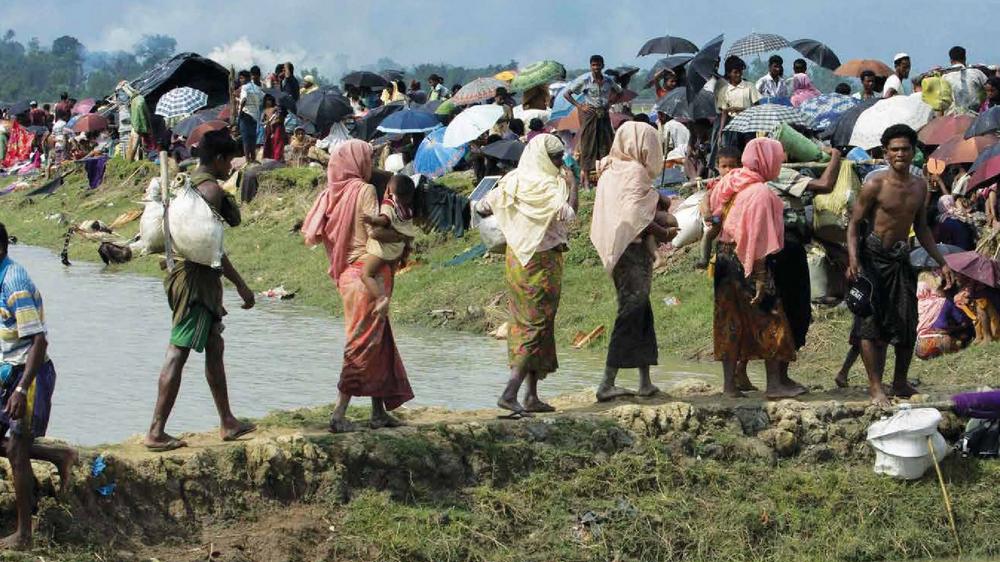
Recent Rohingya influx in our country and the related issues also came up which has been pulling Bangladesh backward jeopardizing all the achievements it has made in the last quarter century. . Bangladesh thus urged the international community to come forward to find a sustainable resolution to the Rohingya issues.
As also underlined which echoes the expert opinions that Bangladesh put youth and women development at the heart of the national development agenda, in order to realize the vision to transform Bangladesh into a middle-income country by 2021, and a developed country by 2041.
The theme of CPD’s 52nd session was ‘Review and Appraisal of the Program of Action of the International Conference on Population and Development and its Contribution to the Follow-Up and Review of the 2030 Agenda for Sustainable Development’, which was the latest stock taking of ICPD agenda progress and achievements.
Challenges and Promising Changes
Given the enormous challenges faced in the limited resources devoted to population and reproductive health activities, even small progress toward the international community’s goals is noteworthy. In fact, the five-year interval review of the ICPD documented a great deal of commitment and progress, perhaps in part because of the widespread appeal of the concepts in the Cairo agreement and the activism of NGOs.
The review process reinforced two important principles: that women’s health and rights are central to population and development policies; and that non-governmental actors play a critical role in local, national, and international deliberations on population issues. Some examples of this progress include:
- Greater civic participation. Since the beginning of the 1990s, greater openness in political decision making can be seen at all levels: international, national, and local. NGOs, religious and community leaders, and the private sector (what the UN calls “civil society”) are now active partners with governments in deliberations on new policies and programs.
- Changing laws and policies. Continuing the momentum that began during the Cairo process, governments around the world have drafted an impressive array of new legislation and strategy documents. The UN reported in 1999 that, since the Cairo conference, more than 40 countries had taken concrete policy actions toward the goal of providing universal access to reproductive health care.
- Improving reproductive health services. Improvements in reproductive health services have involved reorganization, resetting priorities, and retraining service providers. Government reports and independent studies conducted for the five-year review of the Cairo PoA provided scores of examples of such improvements. While relatively few, albeit prominent, countries established comprehensive reproductive health policies and programs, many introduced or expanded certain elements of health care.
Two common initiatives have been the integration of health services (to meet a broader array of health needs in a single health visit); and improvements in service quality, particularly efforts to improve health care providers’ technical and counseling skills.
The Nairobi Summit
Over the past 25 years we have made significant progress on advancing the ICPD agenda. However, the world imagined at the ICPD in Cairo is far from reality as millions of individuals and couples are still not free to choose whether, when or how many children to have. In the current context, universal sexual and reproductive health is central to achieving the United Nations Sustainable Development Goals (SDGs). Urgent and sustained efforts are crucial for the international community to meet the SDGs by the 2030 deadline.
The governments of Kenya and Denmark and the ICPD agenda host, UNFPA are co-convening the Nairobi Summit on ICPD25, a high-level conference to advance the implementation of the Program of Action scheduled in mid-November 2019. The conference is set to offer an inclusive platform to bring together governments, UN agencies, civil society, NGOs, women’s groups, youth networks and the private sector to make global commitments to end the unfinished business of ICPD.
These commitments will be centered on achieving the “three zeroes”:
- Zero unmet need for family planning information and services.
- Zero preventable maternal deaths.
- Zero sexual and gender-based violence and harmful practices against women and girls.
The Summit will also revolve around five themes:
- Universal access to sexual and reproductive health and rights as a part of universal health coverage.
- Financing required to complete the ICPD. Program of Action, and to sustain the gains made.
- Drawing on demographic trends to drive economic growth and achieve sustainable development.
- Ending gender-based violence and harmful practices.
- Upholding the right to sexual and reproductive health care even in humanitarian and fragile contexts.
Over the course of the Summit, delegates will discuss how to work together to implement the commitments and reach our goals by the SDGs deadline. The global commitments will then lead to specific national and local commitments by all stakeholders, with the overall target of ending the unfinished business of ICPD within the next decade.
Conclusion
As the Population Resource Bureau analyzes, in the 21st century, continued population growth presents many of the same challenges to development as the rapid growth of the last century. But governments’ responses to growth (in particular, their public stances) are dramatically different from a decade ago: Policies aimed at population control are no longer acceptable in most countries.
An important lesson from the Cairo process is that national population goals cannot be pursued without some form of public scrutiny, either at home or abroad. If individuals’ perspectives and needs are disregarded, policies will likely meet with evasion or open resistance. Now that NGOs and citizen activists have taken on a prominent monitoring role in international agreements, they are likely to continue to pressure governments to respect individual rights.
Given (a) the growing body of evidence showing the links between women’s status and population and development trends, and (b) the growing influence of women’s groups, it is hard to imagine that women’s health and rights issues will disappear from population policy debates. Issues related to sexuality and childbearing are value-laden and complex, ensuring that policy debates will continue. In addition, continued sexual and gender based violence threatens all the achievements so far both ensuring access to SRHR services and information and confirming gender equality. Thus the Nairobi talks are much awaited talk to look into ourselves, celebrate our achievements, re-set our targets for making our population as resources and keeping the pace of our development.
References
- https://www.unfpa.org/news/explainer-what-icpd-and-why-does-it-matter
- https://www.nairobisummiticpd.org/news/about-nairobi-summit
- https://www.dhakatribune.com/bangladesh/development/2019/04/02/bangladesh-ready-to-share-best-practices-in-population-development
- https://www.prb.org/whatwascairothepromiseandrealityoficpd/
- Framework for Actions of the ICPD beyond 2014; published by United Nations, NY, USA, 12 Feb 2014
- ICPD beyond 2014, High Level Global Commitments: implementing the population and development agenda; published by United Nations in the 29th UNGASS session, NY, USA, 2014
- Population Dynamics in the Post-2015 Development Agenda: Report of the Global Thematic Consultation on Population Dynamics; published jointly by UNFPA, UNDESA, UN-HABITAT & IOM, 2013


This article has been published in “বিশ্ব জনসংখ্যা দিবস ১১ জুলাই, ২০১৯”. All rights are reserved by the publisher.